
CeNTech R & D
Nano-Analytics
Prof. Dr. Harald Fuchs
The research activities of the "Interface Physics" group headed by Prof. H. Fuchs comprise the:
- development of new Scanning Probe techniques (STM, SFM, SNOM, SICM, DiPen)
- generation and characterization of self-organized functional molecular systems
- Nanobiotechnology / Nanomedicine
- Ab inito computational investigations of molecular systems
The group integrates Physicists, Chemists and Biologists and coordinates numerous local and international research programs in the field of nanoscience and nanotechnology.
Contact / Details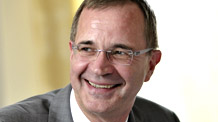
Prof. Dr. Helmut Zacharias
The research group "Generation of ultrashort laser pulses and its application" of Prof. H. Zacharias focuses on physical and chemical processes upon, within and underneath surfaces and interfaces. A goal is to contribute in understanding catalytic surface reactions. For this approach the group designs and develops compact femtosecond laser systems at high repetition rates, short pulse duration and high pulse energy. These ultrashort laser pulses can be used to generate soft and hard x-ray pulses which on the other hand enable time-resolved experiments with a comparable high time resolution.
Contact / Details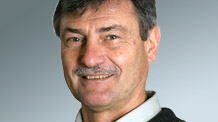
Dr. Harry Mönig
The research group "Nanoscale Interface Analytics" focuses on investigations of the structural, chemical, and electronic properties of organic, inorganic and hybrid interfaces on the nanometer scale. We perform complementary scanning probe microscopy- and photoelectron spectroscopy experiments under ultrahigh vacuum conditions to study interfaces with high technological relevance (e.g. for solar cells or light emitting diodes) under defined conditions. Our approach with locally resolved and integral measurement techniques is a powerful combination, which satisfies the high demand for a controlled material and interface engineering on a nanometer scale.
Contact / Details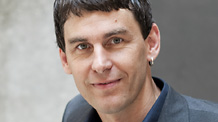


© CeNTech GmbH
Center for Nanotechnology
Heisenbergstr. 11
D 48149 Münster
Tel: +49 (0) 251 53406 100
Fax +49 (0) 251 53406 102